In this guide
Understand why public-health and social needs appear in a health system’s work, without assuming every resource is an employee benefit.
Read the public mission
Northwell’s community-resource mission describes work addressing social determinants such as housing, food, education and transportation. That gives employees a broader picture of the organization’s role beyond a clinical encounter. It does not mean this publication can arrange assistance or that every listed program is available to every person, at every site, whenever needed.
Separate needs from service eligibility
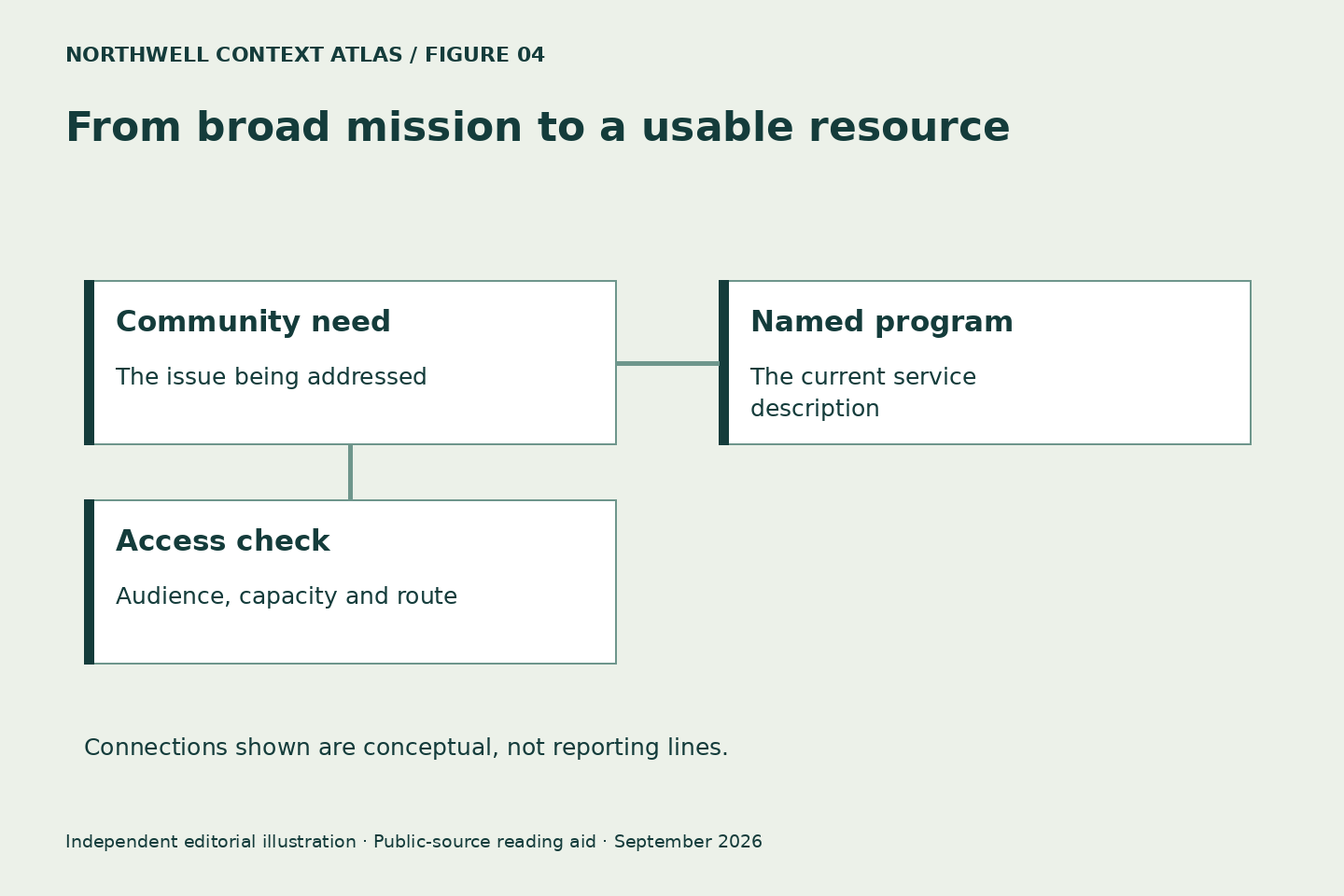
Recognizing a need is different from confirming that a particular program can meet it. A public mission statement does not establish enrollment criteria, geographic coverage, current capacity or a referral process. When a resource may be useful, find the current program description and ask the authorized service about those practical details. Do not promise an outcome based on a broad organizational goal.
Understand the employee relevance
A team member may encounter community-health work through a project, event, public report or collaboration with another function. Knowing its purpose helps avoid treating every issue as a hospital-location question. It can also improve a handoff: the question may concern a community partnership or resource directory rather than a benefit election or employee account.
Do not collect a case casually
A helpful impulse can lead someone to gather personal details before the right recipient is identified. Resist that shortcut. Start by finding the appropriate public information or authorized referral route. If private information is needed, the service should explain the approved channel and purpose. General workplace notes should not become an unofficial case-management file.
Ask about the actual connection
If a project claims to support a community need, ask which population, which partner and which activity are involved. Keep those facts separate from a hoped-for outcome. A resource list is one type of output; successful access to a service is another. Understanding that difference makes workplace conversations about impact more precise.
Keep the map current
Community resources can change their location, hours, capacity or eligibility. A useful directory entry includes the source and review date rather than presenting every listing as permanently available. When someone needs help now, verify the current route. This atlas supplies organizational context and reading methods, not a clinical recommendation, emergency service or individual resource determination.
Follow one need through three questions
Take transportation as a topic in the published community-health mission. The mission establishes that transportation-related social needs are within the broad context being discussed. It does not identify a particular ride, service area or booking entitlement. To make the information useful, ask which named resource addresses the need, whether that resource currently serves the relevant location and who can confirm its conditions. Keep a person’s private circumstances out of the general search. This example shows the distance between an organizational priority and a verified, usable service connection.
Continue with Community Benefit and Employee Benefits: Similar Words, Different Work, or The Work Behind the Work: Understand Cross-Functional Dependencies.